This week, the lieutenant governor of South Carolina, Andre Bauer, compared children who get subsidized school lunches to animals when he told a story about his grandmother instructing him not to feed stray animals. "You know why?" he asked in a speech, "Because they breed! You're facilitating the problem if you give an animal or a human ample food supply. They will reproduce, especially ones that don't think too much further than that."
Like Missouri State Representative Cynthia Davis, who last year opposed government programs to feed hungry children and famously said “hunger can be a positive motivator,” Bauer, who pointed out the correlation between low test scores in school and children who receive subsidized lunches, concluded that it is free lunches that cause the low test scores, and not poverty.
Commentators have pointed out the insensitivity and ignorance of Bauer’s remarks and the inevitable conclusion: that starving poor children will reduce poverty because it will stop them from breeding.
Bauer, who plans on running for governor of South Carolina, has now apologized for his choice of metaphors, but stands by the sentiment—that providing food or assistance to the poor keeps them dependent, and thus contributes to the continuation of poverty.
But on top of apologizing for insulting the poor by comparing them to stray animals, and implying that too much free food is to blame for their poverty, perhaps Bauer should consider apologizing to animals for his faulty logic in the first place.
Why does Bauer (or his uneducated grandmother who originally taught him this lesson) think that the problem of stray animals lies in their being fed?
Dogs and cats are stray not because they are fed too much, or even because they reproduce too much. They are stray because they have been abandoned, and prior to their abandonment, they were most likely bred by someone who wanted to profit off of the birth of puppies or kittens, wanted to experience the “beauty of birth,” or simply did not take the responsible position and spay or neuter their companion animal.
That stray animals breed is a function of the fact that they were never neutered or spayed—this, like the fact that they were abandoned, is not the fault of the animal but the “owner” who was responsible for them.
Animals are stray not because they breed, or because they are fed too much, but because no one cared enough about them to start with. They were intentionally, carelessly, or casually bred, and were then left to fend for themselves when caring for them became too much work.
According to the Humane Society of the United States, 6-8 million former companion animals enter animal shelters every year, and of those, 3-4 million are euthanized. Many of those animals were surrendered by their families, and many were found as strays, wandering city streets. In either case, these animals were once bred or allowed to breed, by humans, and were ultimately abandoned to fend for themselves.
That Bauer, or anyone else who shares Bauer’s sentiments, could assume that feeding unwanted animals is what causes or even exacerbates the problem is not just ignorant and insensitive, but cruel. While feeding a stray animal will not solve the problem of homeless animals—spay/neuter programs, public education, increased shelter adoptions, and legislation mandating responsible care and treatment of companion animals are needed for that—it can certainly make one hungry animal’s life a little bit easier. That the potential future governor of South Carolina would deny hungry animals food, just as he would deny hungry children food, is a scary thought indeed.
Friday, January 29, 2010


Thursday, August 13, 2009

Tuesday, August 4, 2009
More to Love Indeed

Last night, I finally got around to watching Fox's new dating reality show, More to Love.
While I enjoyed it, in the same way that I enjoy watching other reality shows in which people are humiliated and cry on camera, I felt even dirtier than usual watching it. And not just because I felt sorry for these "curvy" women and their shameful exploitation at the hands of Fox.
The problem was that while I was excited to finally see a dating show that featured women (and a man) who aren't size 2, and with whom people like me could identify, I quickly realized that the show wasn't about finally giving us fat folks our time in the sun.
It was about creating a spectacle in which fat women could be gawked at, and laughed at, by America.
One of the pleasures of watching The Bachelor, on which this show is modeled, is seeing women who desperately crave male love and attention go insane before the camera, weeping over a man they've only met that week (or sometimes that night). Certainly schadenfreude is one of the most compelling reasons to watch reality tv.
But More to Love hit close to home for me. I am, like many Americans, a fat woman, and I am evidently quite lucky that someone loves me. (Of course my husband and I met when I was substantially thinner than I am now.)
But the women on this show, during their "confessionals," tell us that a fat woman is not worthy of love. They all told remarkably similar, and heartbreaking, stories about not having had dates before, having been rejected over and over because of their weight, and being consigned to the role of the fat friend--always the bridesmaid, never the bride. Not only never the bride, but most of these women have apparently never even made it to first base. On this show, fat is not empowering or beautiful, but pathetic and sad.
While ostensibly the show intends to demonstrate that all women, regardless of size, can be beautiful and can be loved, clearly that won't be the lesson for either the viewer or the participants. In fact, of the five women who were sent home in the show's first episode, at least one said that it was her "last chance" to find love. So being rejected by Luke, the show's bachelor, means that there is no one out there to love them, even though the set up of the show--20 women competing for one man--means, by definition, that 19 women will be rejected.
And to make matters worse, not only have many of these women not had a single bit of amorous attention in their lives, but Luke gave out diamond rings to all of the women, as a symbol of his promise to accept them the way that they are. After a few of them cry (again, the women go from never having dated to wearing a diamond ring on their ring finger) in relief and delight, they are told to remove the rings, because only those women who are asked to stay get to keep their rings. Those women being sent home go home ring-less, hopeless, and even more despondent than when they arrived.
Oh, I'll keep watching. But I'll feel shameful and ashamed--for the women on the show, most of whom will end up feeling more defeated and deflated than ever, for other fat women watching the show, who are being told that this exploitative show is "inspirational," and for me, who feels grateful that I have a husband, yet sickened at the notion that if I didn't, I would never find love again.
Because as we learned last night, between all the tears, fat women are not worthy of love.
Monday, June 15, 2009
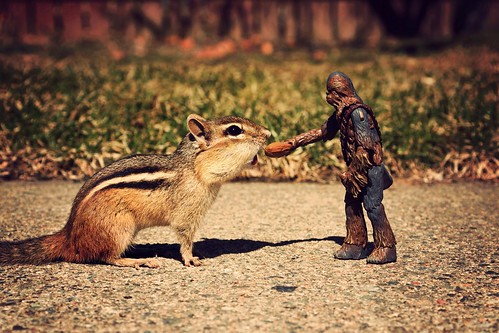
Ridiculously cute photo of the day

I haven't posted for a number of weeks, because I've been overwhelmed by a local rabbit crisis here in New Mexico. We have ended up with over 300 rabbits who badly need placement; we have sent out 190 to new homes and other rescue groups so far, but still have 132 to place. If you are interested in helping one of these adorable babies, please contact me at margo@rabbit.org. To find out more, please visit www.rabbit.org/newmexico.
Tuesday, May 19, 2009

Thursday, May 7, 2009

Subscribe to:
Posts (Atom)


 Posts
Posts


